
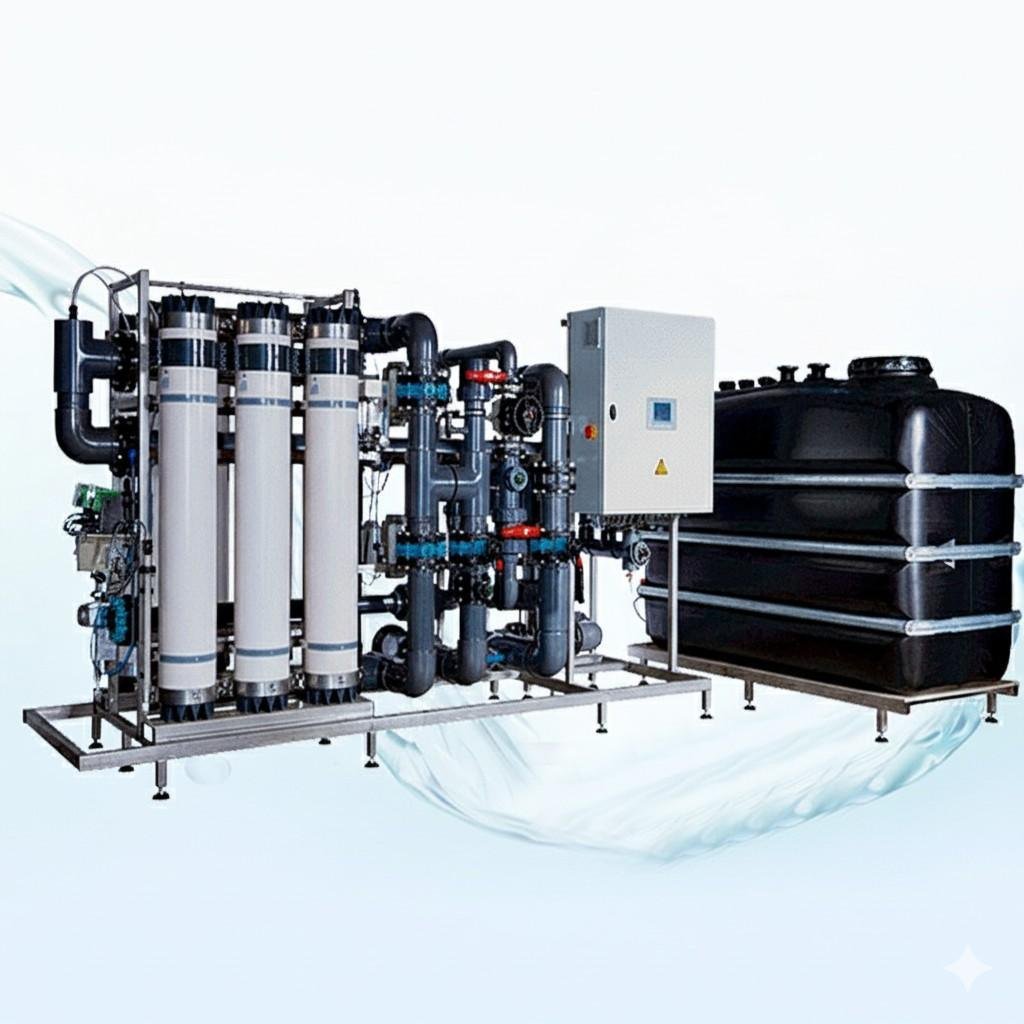
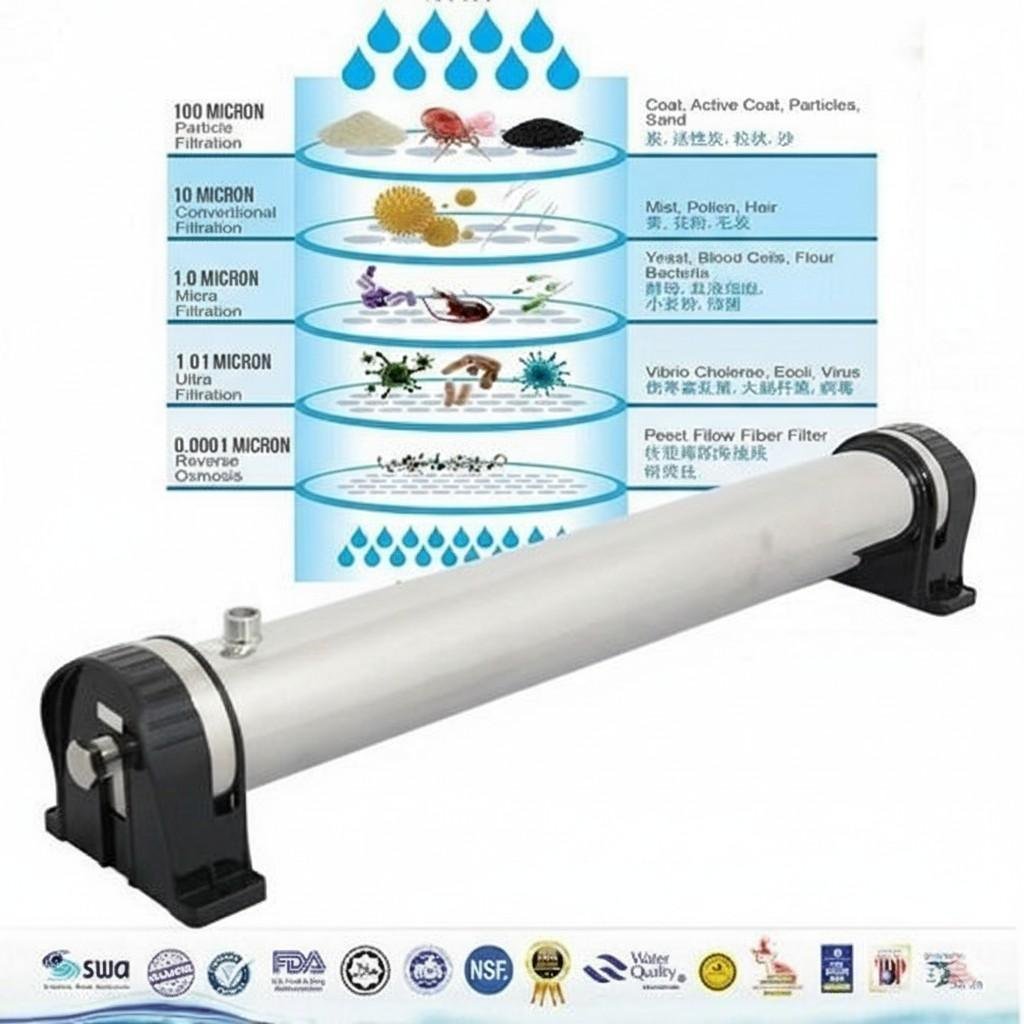
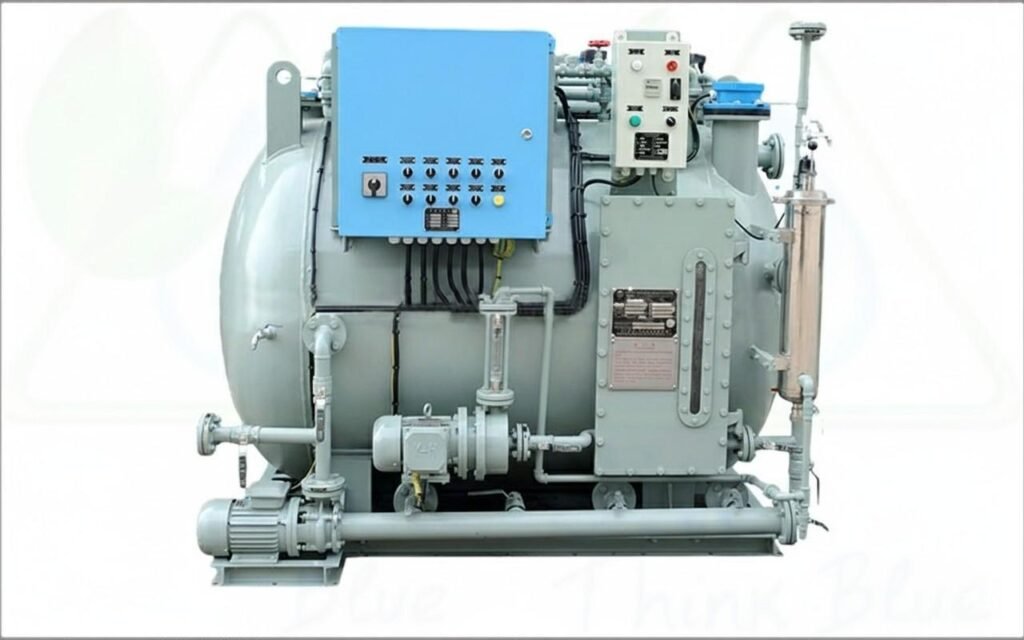
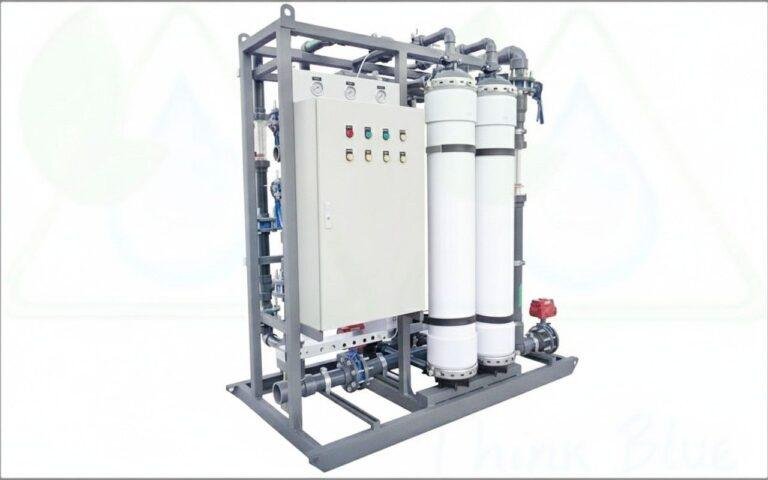
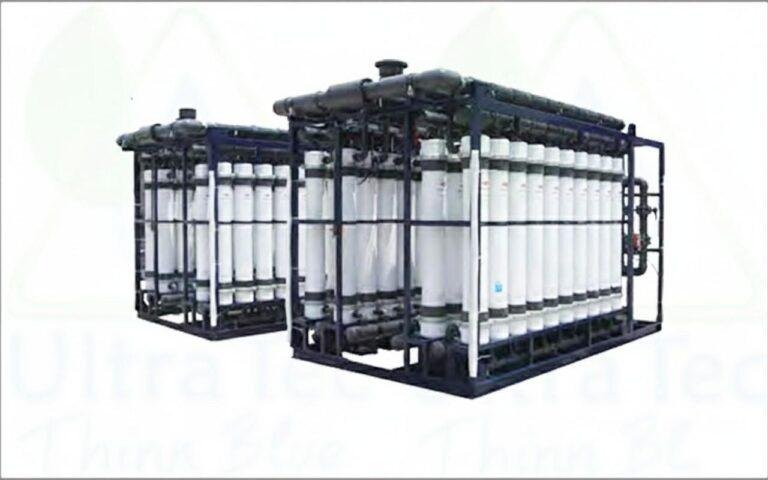
An ultrafiltration device operates as a precise membrane separation process. Hydrostatic pressure forces water and solvents against a semi-permeable membrane with very fine pores. This physical barrier allows water and low-molecular-weight solutes to pass through while blocking suspended solids, bacteria, viruses, and macromolecules (typically in the 10³ – 10⁶ Dalton range).
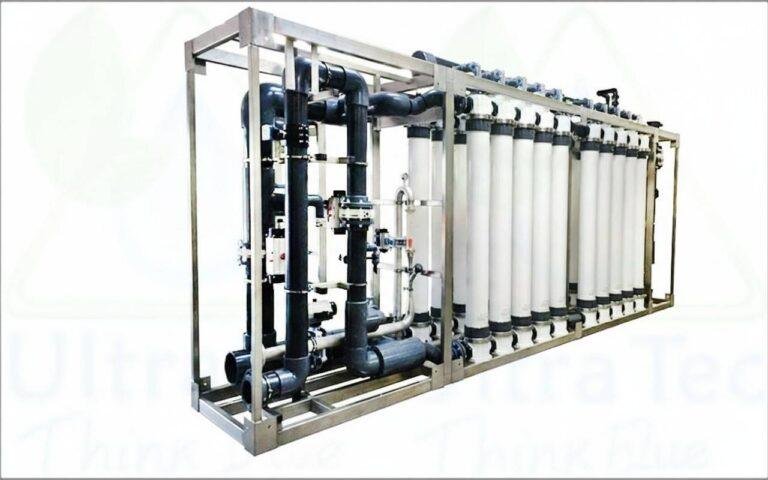
This process is distinct from microfiltration or nanofiltration primarily by the size of particles it removes. Modern, effective ultrafiltration systems often use back-flushable, air-scoured membranes, with spiral-wound or hollow fiber configurations offering excellent performance for clarifying process and wastewater, frequently eliminating the need for traditional clarifiers and multi-media filters.
In ultrafiltration water treatment, the system utilizes hollow membrane fibers to eliminate suspended solids, pathogens, bacteria, and viruses from feed water. Pumps push the water through microscopic pores, typically ranging from 0.01 to 0.10 microns, which act as a physical barrier. An ultrafiltration example in a treatment train would be using strainers to remove large solids before the water enters the UF system itself. This technology is a cornerstone of modern water management. After UF treatment, the high-quality effluent can be sent directly for public use or to a reverse osmosis system for further purification, making it an extremely effective pretreatment step.
Project Done
Happy Customers
Awards Win